HIV Buddies — changing behavior, not just minds.
Brand, platform, content, and real-world events for a culturally sensitive HIV network serving South Asian, MENA, and Muslim communities across Canada — designed to change what people do, not just what they know.
Digital engagement & content design — contract + volunteer
Brand, website, posters, avatar videos, event design
Young gay South Asian, MENA & Muslim communities
500+ men reached · ~100 PrEP clinic registrations
Stigma is a design problem
In South Asian, MENA, and Muslim communities, HIV carries a silence that formal public-health communication cannot break — a health-department poster reads as institutional, clinical, and someone else's problem. The people most at risk, young gay men navigating culture, faith, and family, were the least reached by the existing system.
The decision: sound like the community
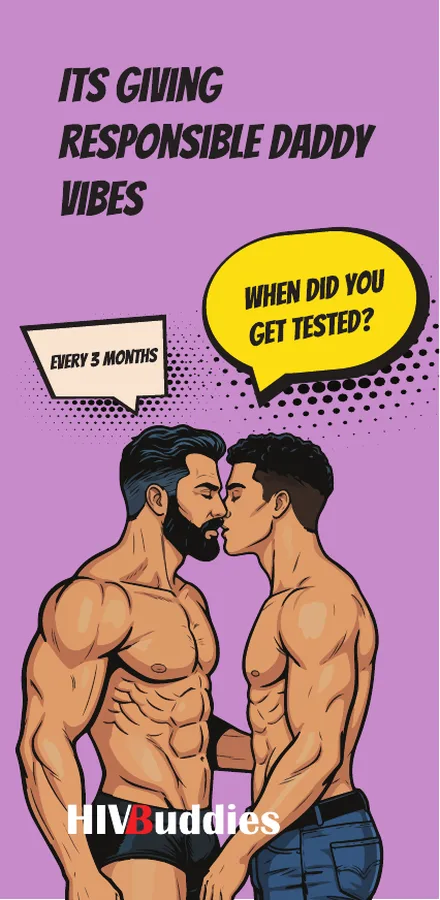
We rejected formal health language and wrote the way the community actually talks — punchy, funny, a little cheeky, in the register of queer group chats rather than clinics. The language was the design decision: content people would actually share, not content that made them look away.
Regular HIV testing is recommended every three months for sexually active individuals.
Speak to a healthcare provider to determine your PrEP eligibility.
A system, not assets
Every artifact fed a pathway. The postcards were designed to be shareable — printed and digital — and the language did the inviting: members called and emailed after seeing them, asking how to register. The Punjabi avatar video reached newcomers who couldn't navigate the health system; three or four people from its first run reached out — some specifically because of the culturally inclusive avatars — and we walked each one through registration at the partner PrEP clinic in Toronto.
The behavior-change pathway — from first encounter to clinic registration
The campaigns
Talking Buddies: multilingual avatar videos on HIV, harm reduction, and mental health — reaching people in their own language. The Knowledge Exchange Hub connected activists across MENA and South Asia through broadcasts. And the events — Dancing Buddies, Bolly Buddies, a World AIDS Day celebration — met the community where it already felt safe: the dance floor, not the waiting room.
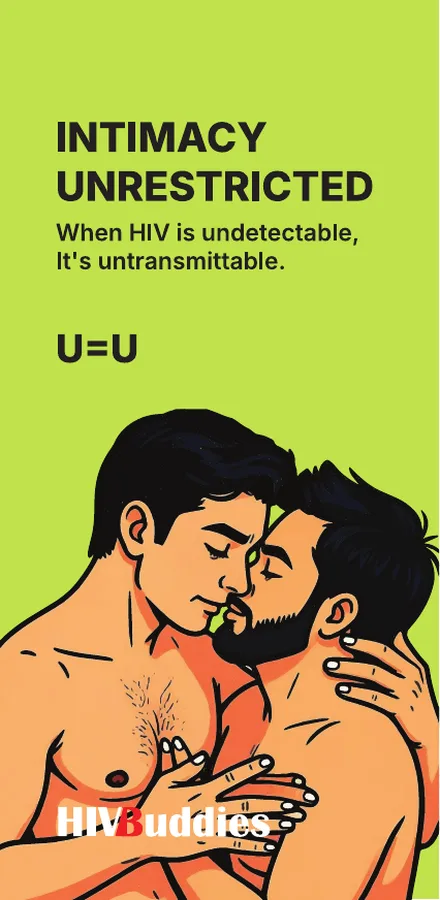
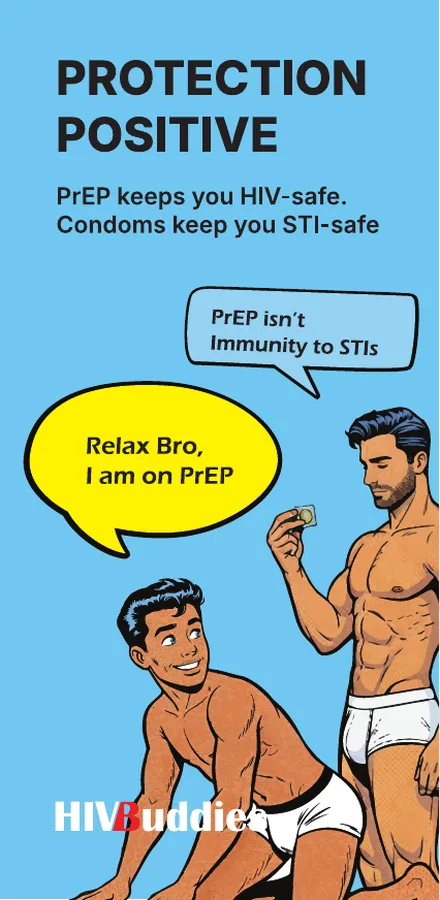
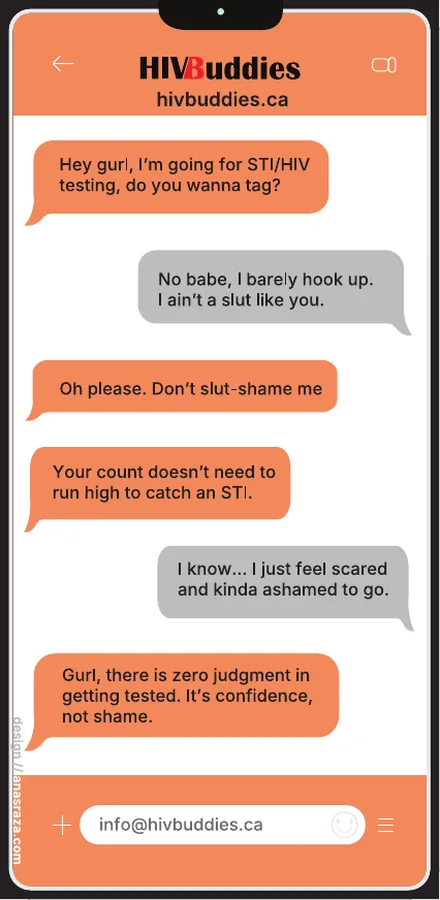
Postcards — sex ed you'd actually forward
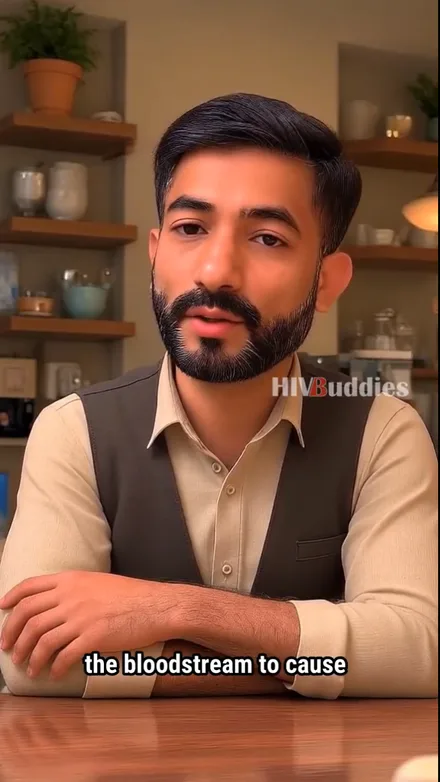
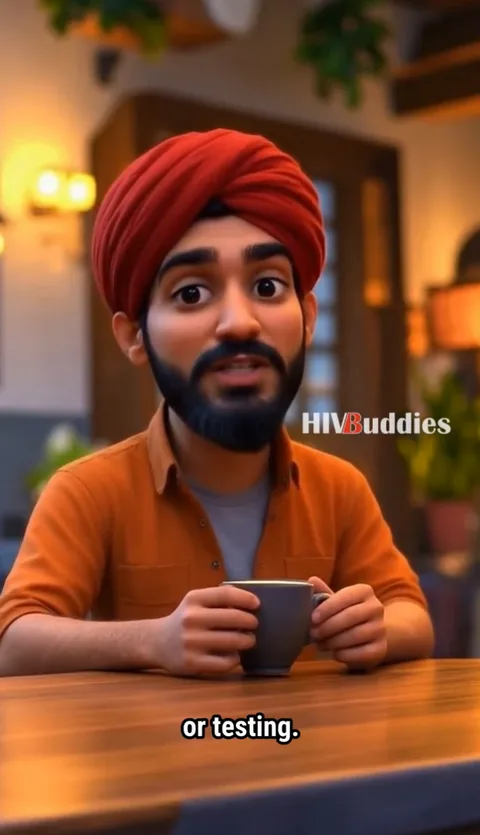

Talking Buddies — multilingual AI-avatar videos: English · Punjabi · Arabic
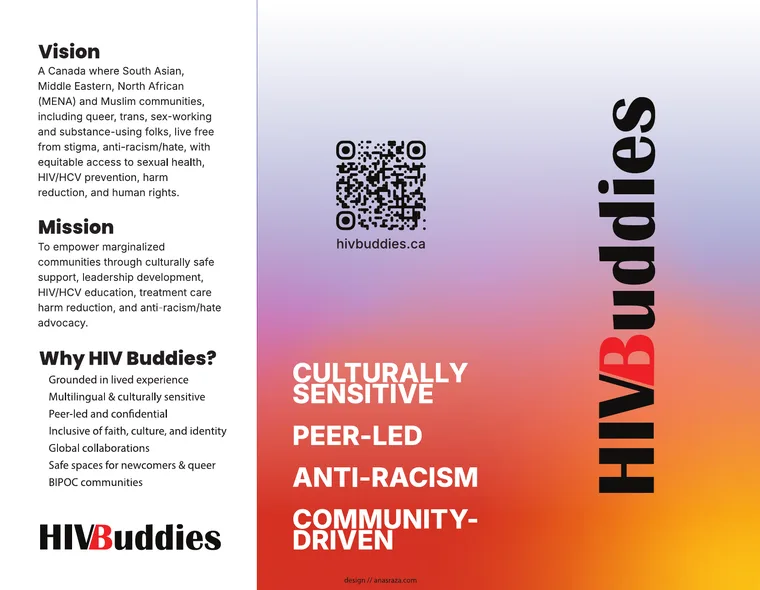
The brand — culturally sensitive · peer-led · anti-racism · community-driven
Outcomes — you can't A/B test culture
What we could measure: 500+ men reached and ~100 PrEP registrations through the HIV Buddies referral — in a community the formal health system had barely reached. What we couldn't: isolate the language from the events from the people. The signal we trust most is behavioral — they came, they stayed, and they brought friends.
Consent in a stigma context
In a community where being seen at an HIV event can carry real risk, no real faces appear anywhere in the campaign. Illustration and multilingual AI avatars carry the representation — recognizably brown, queer, and culturally specific — while protecting every actual community member's identity. People could share the postcards without outing themselves; the avatars could say what a real spokesperson couldn't safely say.