Commuter — retracing rideshare back to ride-sharing.
A concept study, openly unshipped: what would ridesharing look like if it went back to actually sharing rides — neighbors, shared costs, shared direction — and what trust systems would strangers need to get in the same car?
How might we lower the emotional and coordination barriers that prevent daily commuters from sharing rides?
The final problem statement — where the process landed
Uber began as ridesharing and became a taxi service — a platform for professional drivers to earn, not for neighbors to share. The original idea got lost: people from the same area, heading the same direction, splitting the cost of one car. This study retraces that path — and the interesting part isn't the screens, it's the process that got there.
Research → a reframe
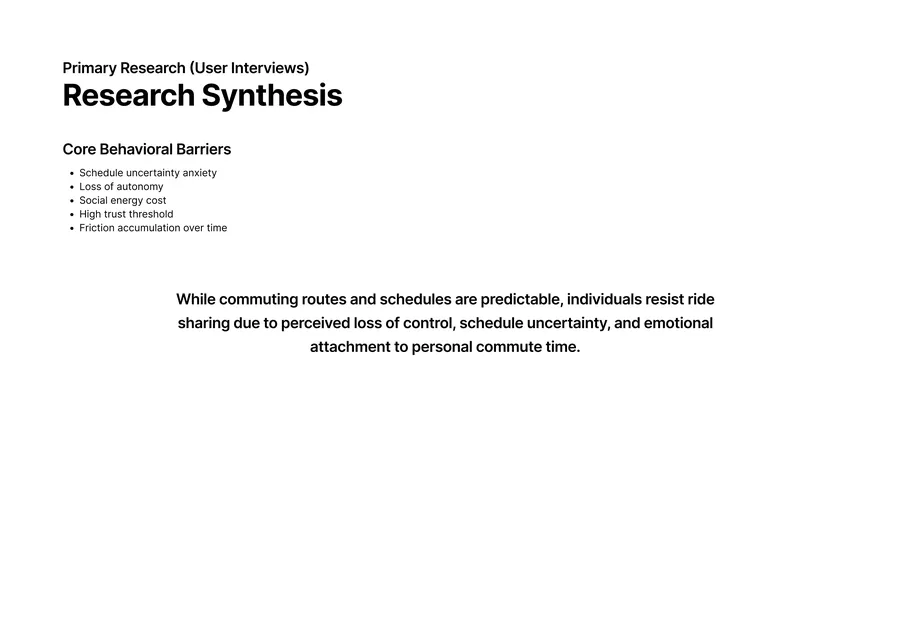
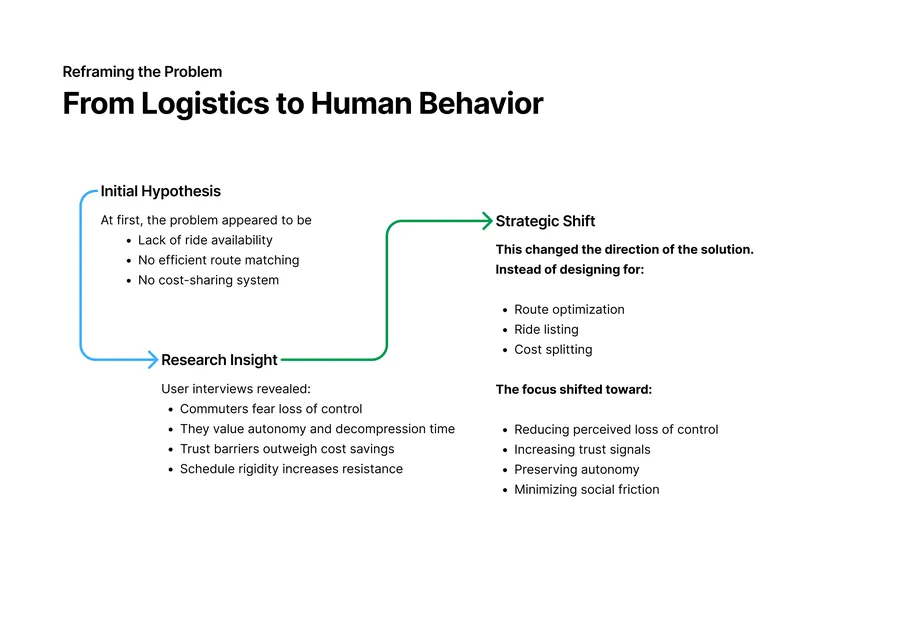
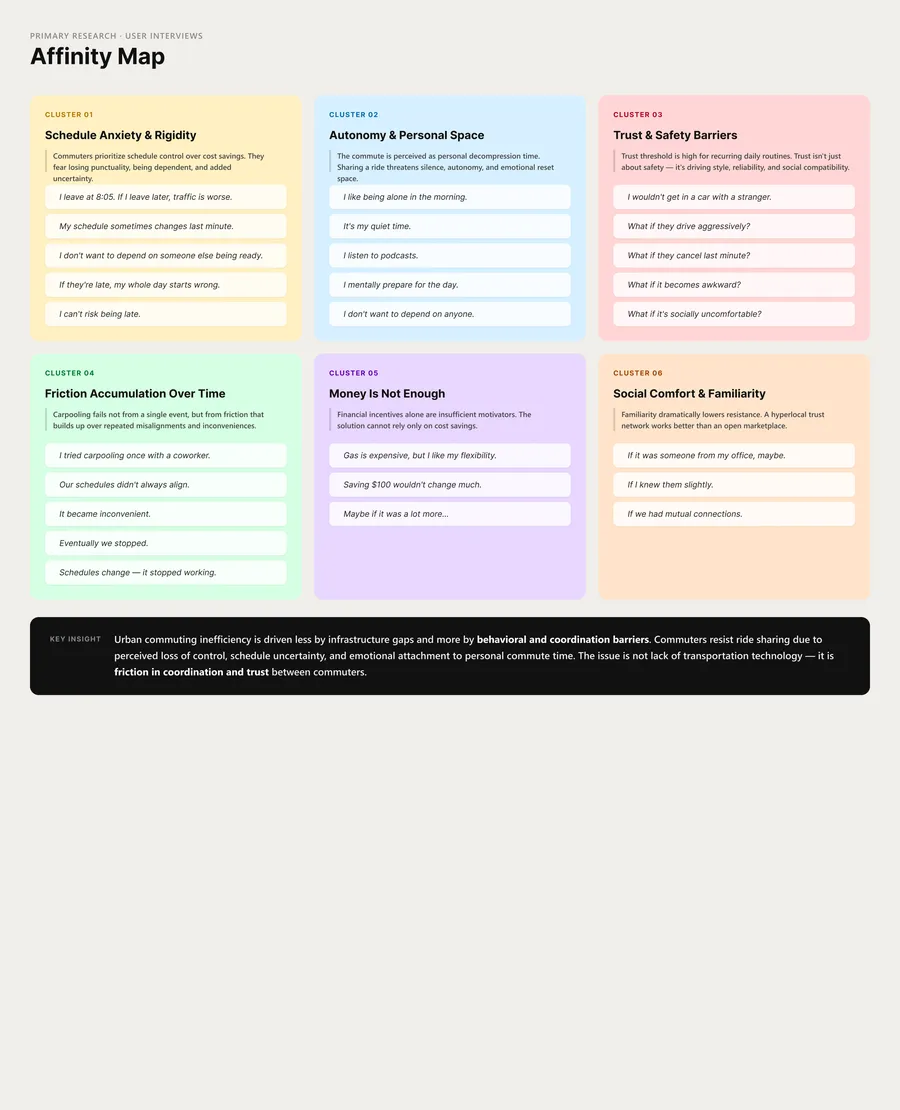
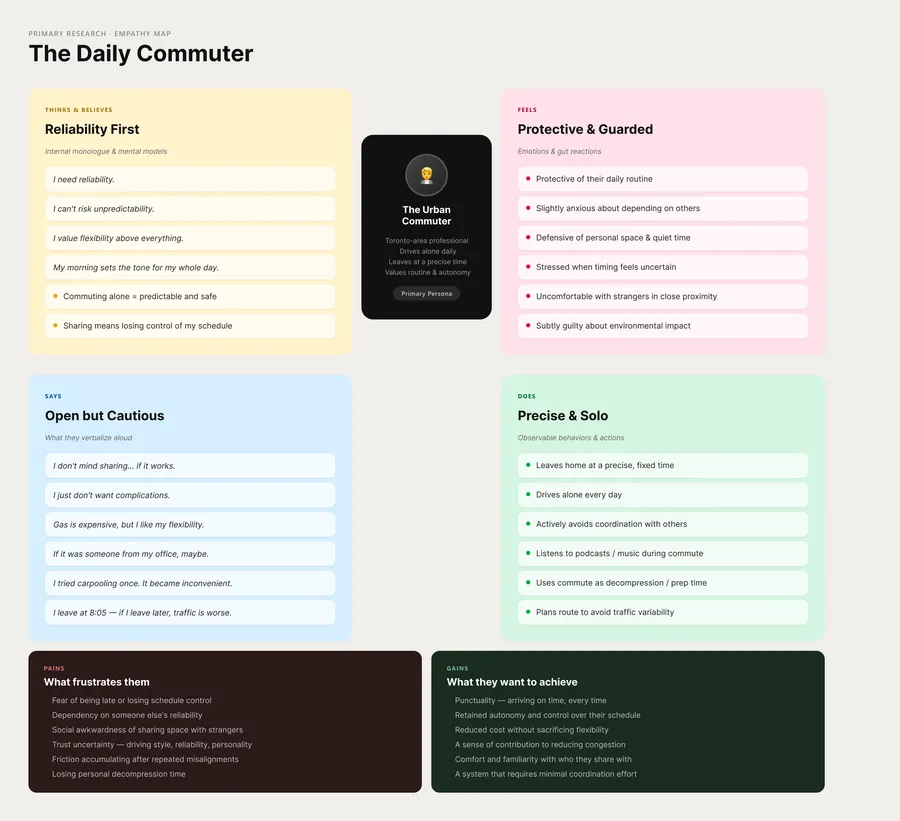
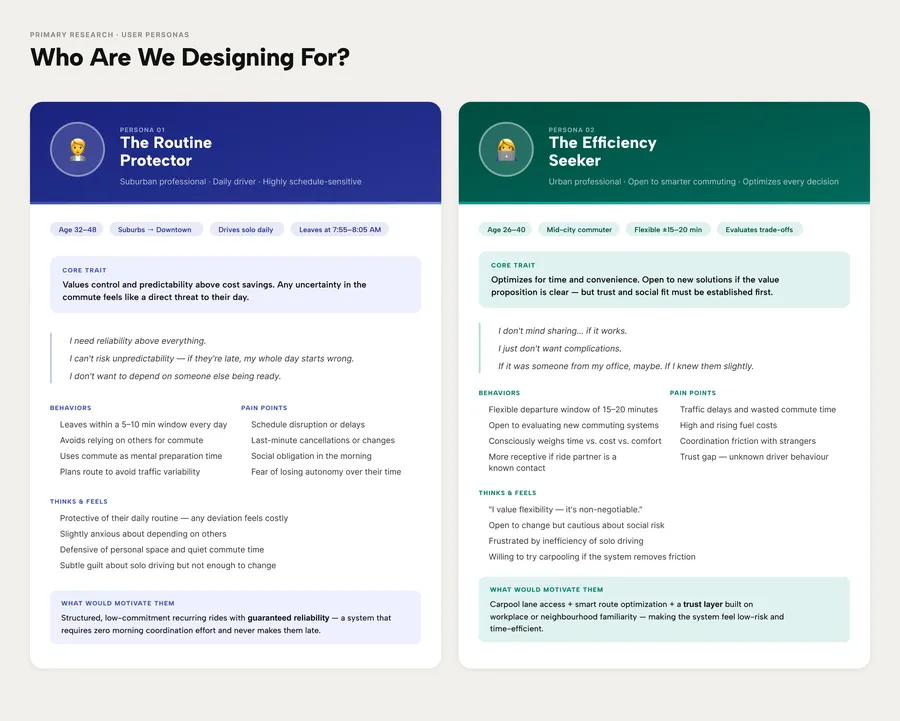
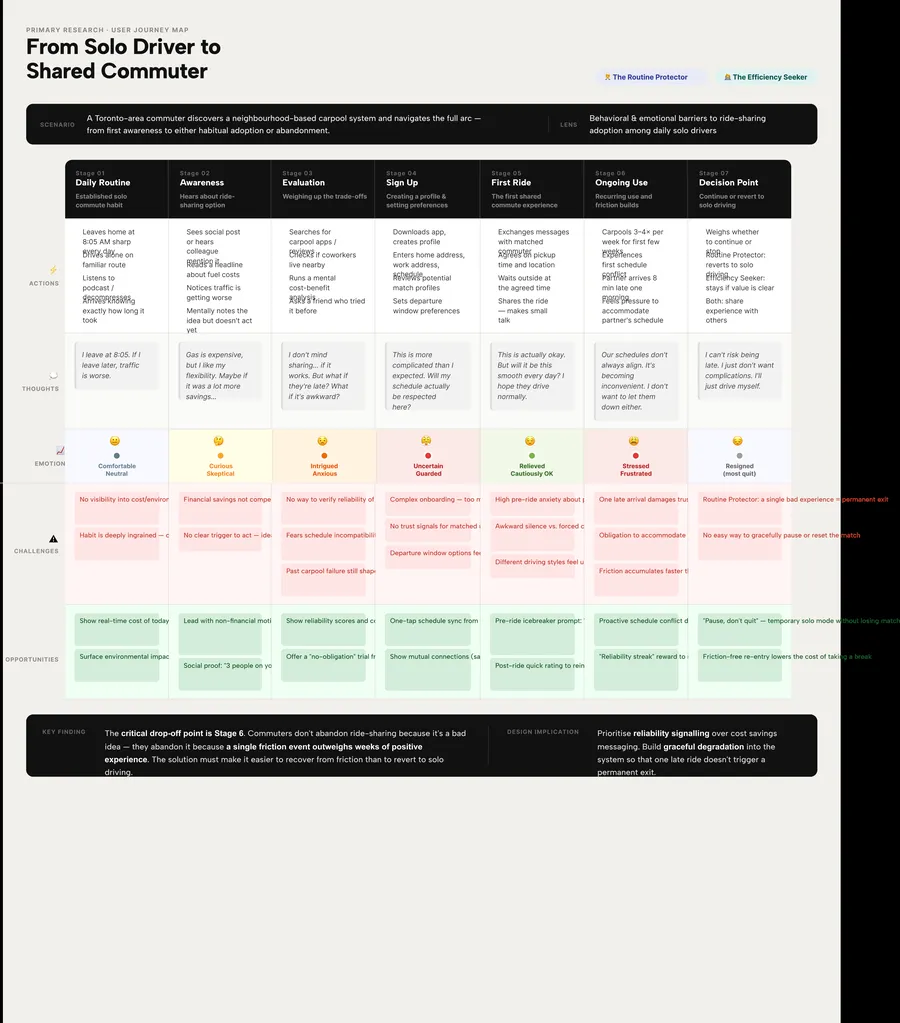
Secondary research said the problem was logistics: occupancy, congestion, cost. User interviews said otherwise — commuters fear loss of control, value autonomy and decompression time, and resist schedule rigidity. The project's pivotal moment was the reframe: from logistics to human behavior.
Understanding the commuter
Ideate → prototype
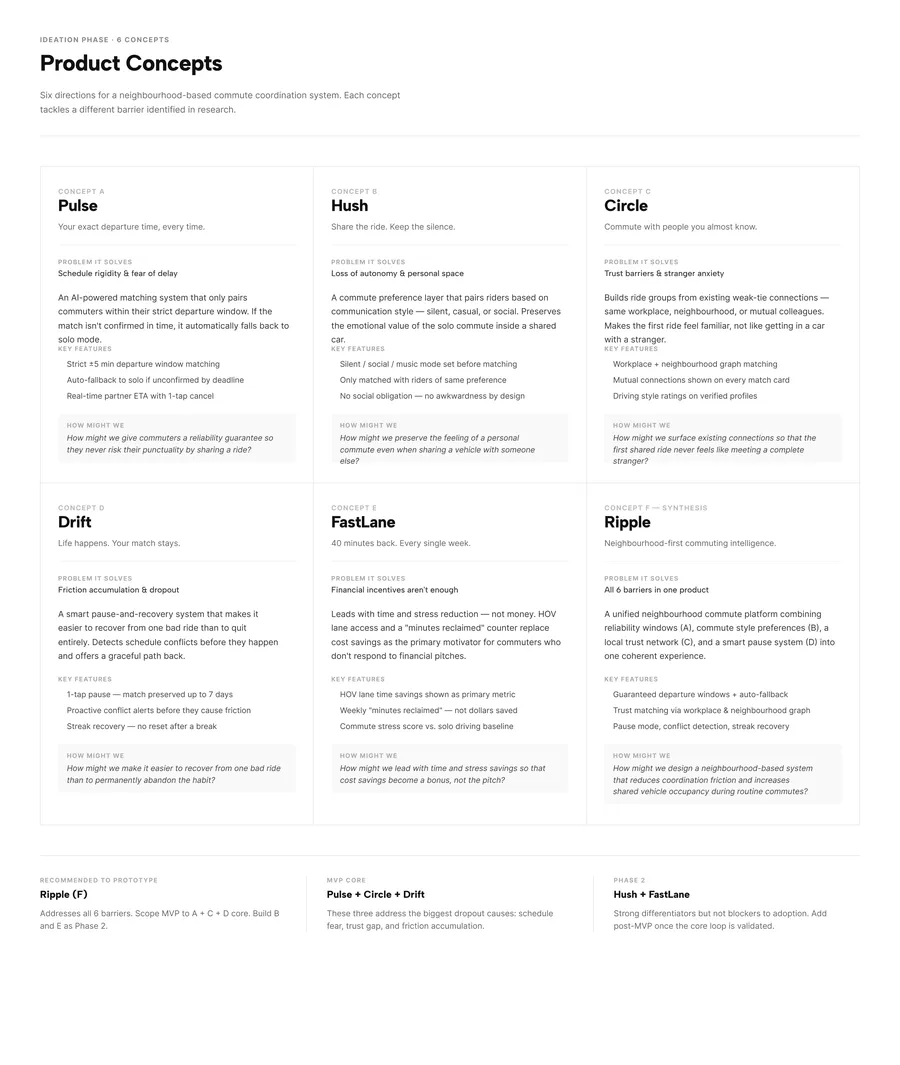
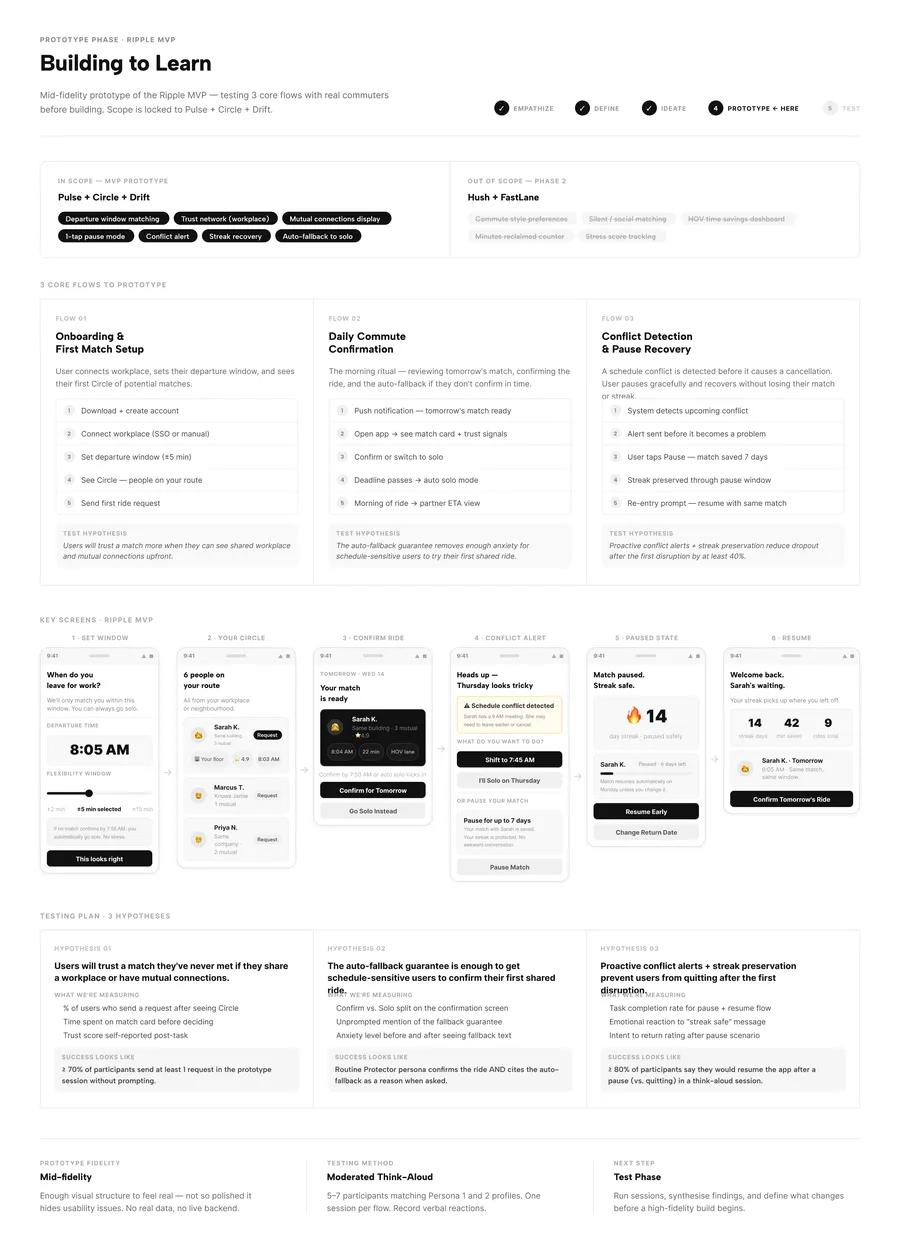
Six named concepts diverged from the reframe — Pulse, Hush, Circle, Drift, FastLane, Ripple — each answering the control-and-trust problem differently. Ripple, the route-based option with bus-stop-style pickups and cost-sharing, was carried to an MVP prototype.
Why it lives here, not with the case studies
This project came out of a double-diamond process workshop, as an early experiment in AI-assisted design workflow — much of its process material was AI-generated under my direction. It's kept as honest process history: the experiment that taught me where AI belongs in my workflow (executing a system I direct) and where it doesn't (doing the thinking for me).
 Figma
AI-assisted process
Product strategy
Figma
AI-assisted process
Product strategy